 ocsheetocsheet
To make an OC character sheet, gather nine building blocks: basic identity, a portrait or reference, appearance notes, personality, abilities or stats, likes and dislikes, key relationships, a short backstory, and a signature quote. Arrange them so a stranger can understand the character in about 30 seconds. You can make one in a browser with a character sheet maker like OC Sheet, which turns those details into visual blocks such as attribute bars, radar charts, personality sliders, and relationship maps instead of a wall of text.
A character sheet (also called an OC sheet or reference sheet) is a one-page profile of an original character. Artists use it to keep designs consistent and give collaborators clear guidance; writers and roleplayers use it to keep personalities, lore, and relationships straight. This guide covers what to include, in what order, and the mistakes that make sheets hard to read. If you are still choosing a tool, see our comparison of the best free OC character sheet makers.
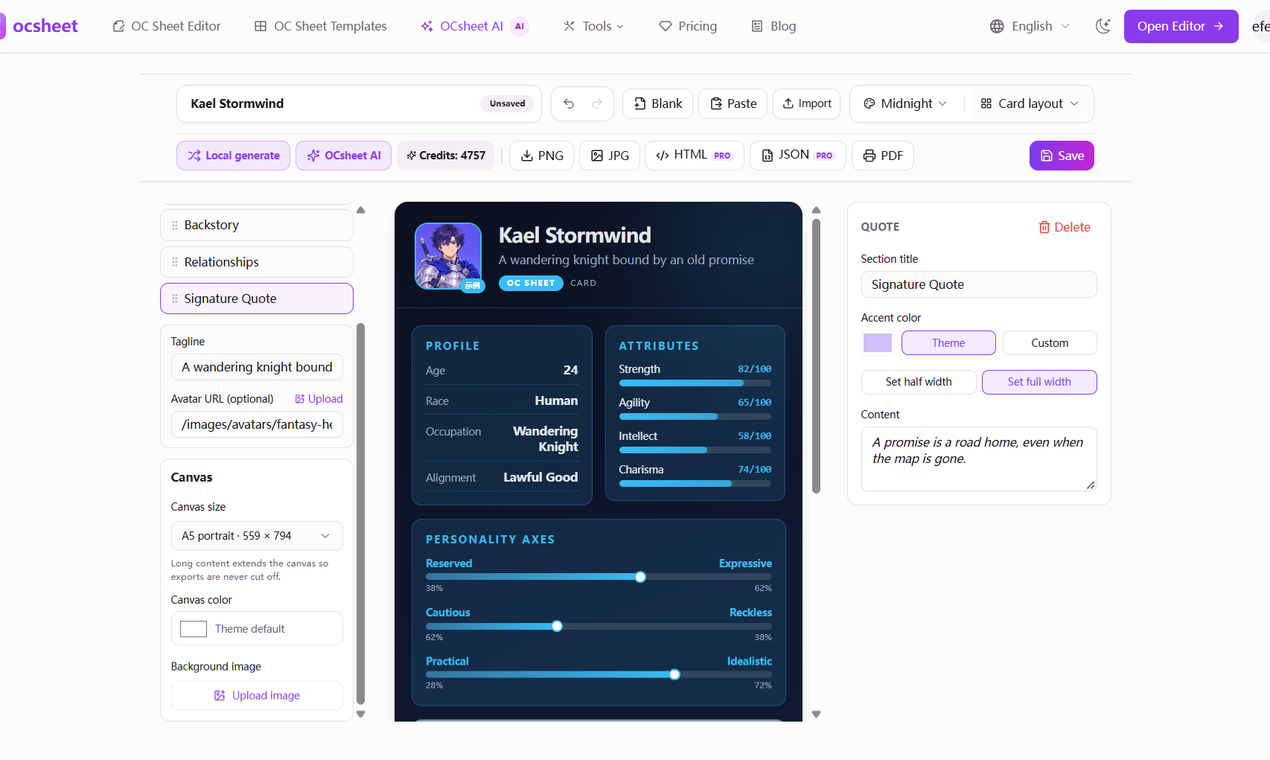
A character sheet can use attribute bars, radar charts, and personality sliders instead of long paragraphs.
Write the five fields a stranger needs first: name, age, species, role, and a one-line tagline (for example, “a wandering knight bound by an old promise”). If you cannot summarize the character in one line yet, start there; everything else on the sheet hangs off it. If you are stuck on a name, a name generator that matches naming style to genre can help you get started faster than a generic baby-name list.
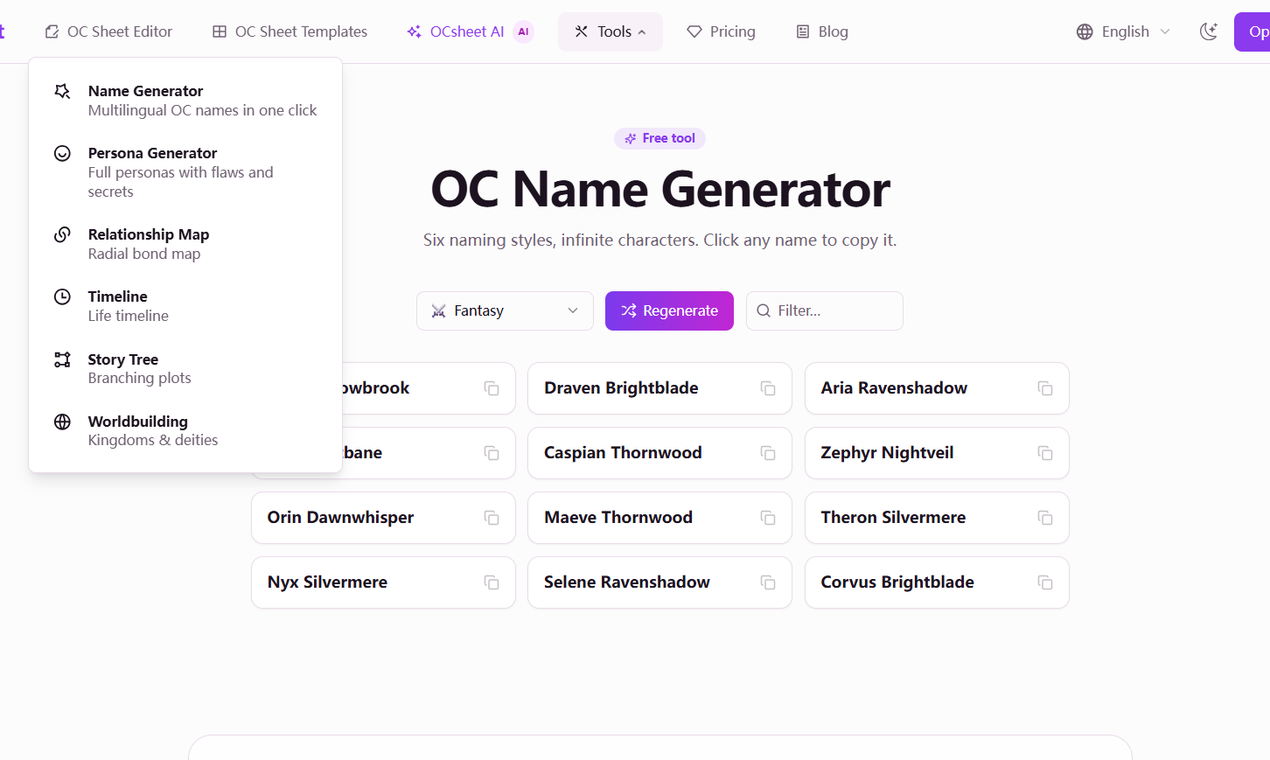
A genre-matched name generator can help when you are starting from zero.
Add a portrait and an appearance block. Separate what is fixed (eye color, a scar, or the coat they never take off) from what is flexible (hairstyles or seasonal outfits). Write down a three-to-five-color palette. This is the section other artists will actually use, so be specific: “mismatched gloves, left one patched” is more useful than “wears gloves.”
Trait lists such as “kind, brave, funny” are easy to forget because they could describe almost anyone. Two changes make personality more specific:
Stats exist to be compared at a glance, so do not bury them in sentences. Attribute bars (Strength 82/100), star ratings, dot ratings, or a radar chart all work; pick one style and keep it consistent. Keep the numbers honest: a character who is above 90 at everything reads like a placeholder, not a person. Let the chart show the same weakness you wrote about in Step 3.
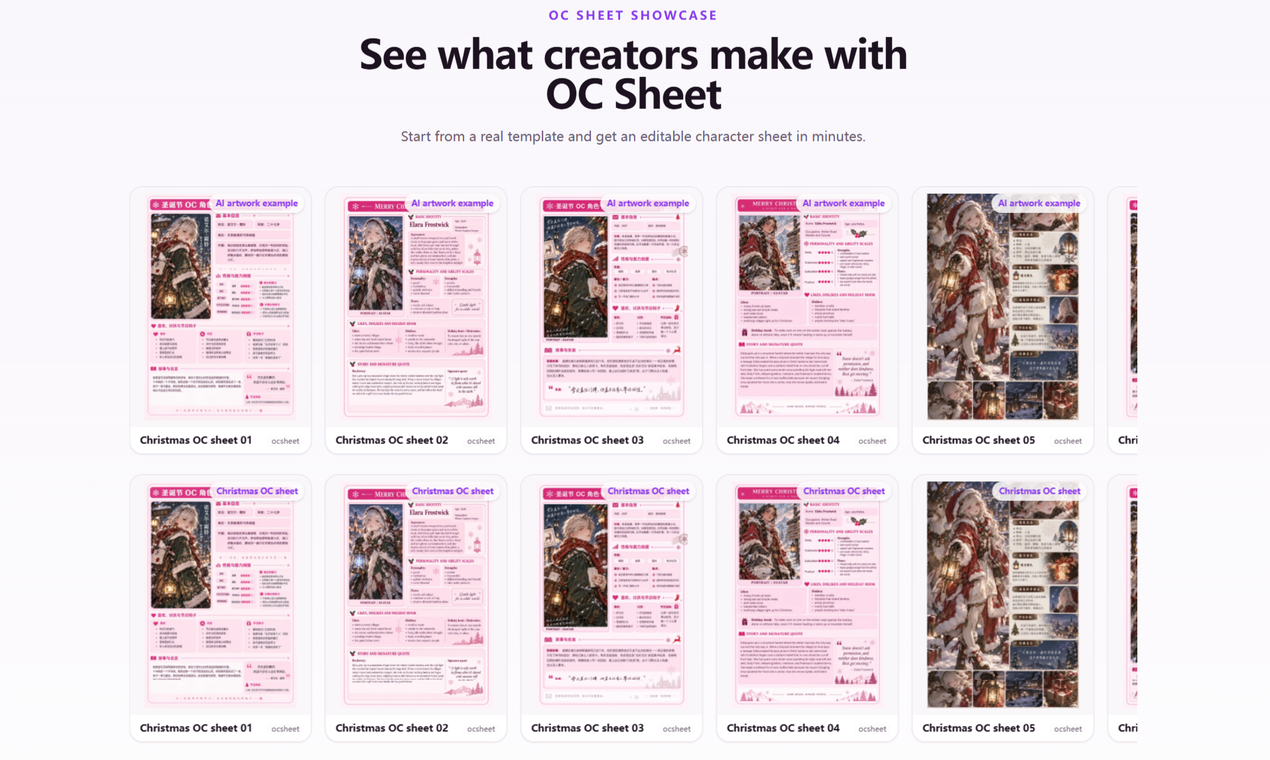
Finished character sheets can make a character’s stats and personality easier to scan.
A character is partly defined by other people. List two to four key relationships with one note each—not just “his sister,” but “his sister; he owes her an apology he has not made.” A radial relationship map, with the character in the center and bonds radiating outward, is a quick way to show those connections.
Backstory is where sheets go to die. Keep details that explain who the character is now. Three to five sentences covering origin → turning point → present desire are enough for the sheet. Longer details and timelines can live in a separate story document; the sheet gets the compressed version.
End with one signature line in the character’s own voice. Then re-read the whole sheet as a stranger: could you describe this character to a friend after 30 seconds? If two sections contradict each other (a “cold, distant” personality next to a backstory full of warm friendships), decide which one is true. That tension, resolved deliberately, is often where the interesting character lives.
Long paragraphs for appearance and personality are a common reason sheets do not get read. Convert details into blocks: bars for stats, chips for tags, and short lines for likes and dislikes.
“Too kind” is not a meaningful weakness if it costs the character nothing. Give them a flaw that creates a real consequence.
Flat, high numbers carry little information. Spread them out so readers can see both strengths and limitations. For example, strengths might sit around 70–95 while weaker areas sit around 15–40, depending on the character and scale.
If the sheet does not record colors, outfit details, and a palette, the character may look different in every drawing. Write down the visual details that need to stay consistent.
Sheets scattered across notes and chat threads are difficult to reuse. Keep the character in one place you can reopen and export.
Doing all of this by hand in a design tool means formatting every block yourself. A dedicated maker can skip that setup. In OC Sheet, pick a template or start blank, then use profile fields, attribute bars, radar charts, personality sliders, relationship maps, timelines, and color palettes. Name and persona generators can help when you are starting from zero.
When the editable sheet is ready, export it as an image. If you want a finished illustrated sheet in a themed style, you can also try OC Sheet AI. Browse OC character sheet templates to find a starting layout.